What is Marmot Pass?
Marmot Pass is a beautiful portal into the inner Olympic Mountain Range, for the seasoned backpacker. If you like mountain views, wildflowers, wildlife, alpine lakes and/or summits then this hike needs to be added to your Pacific Northwest backpacking bucket list.
With a consistent climb up to 6,000 feet, you are brought to the top of Marmot Pass where you find yourself surrounded by stunning views.
The hike itself is 11.5 miles round trip with a 3,489 feet of elevation gain on the way to the pass (6.25 miles from the trailhead). But don’t let this intimidate you!
The hike feels pretty consistent throughout, with one three-quarter-mile noteworthy steep section shortly after you hit the half way mark on your way up. After that, it’s smooth sailing to the pass, where several trails meet.
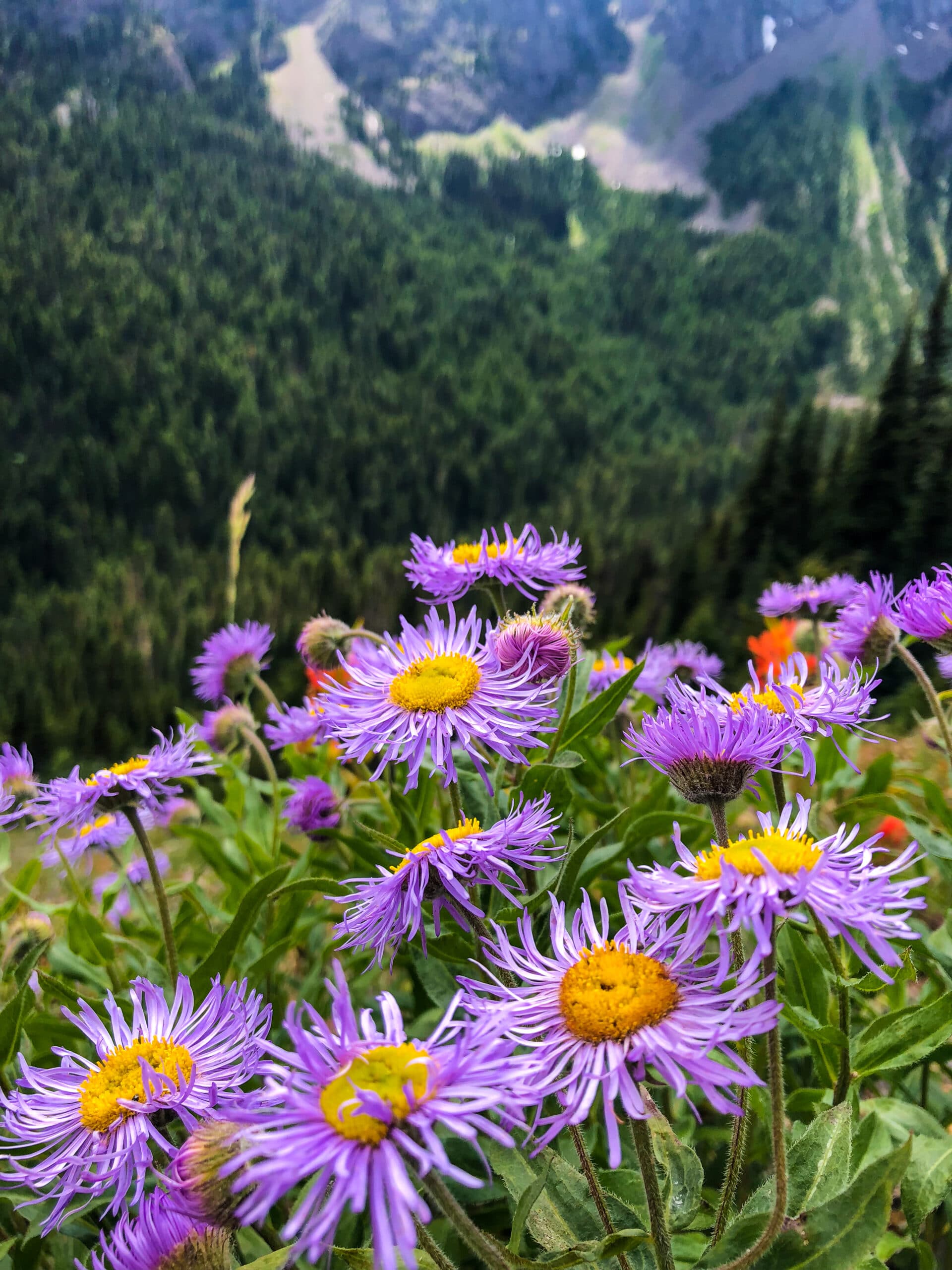
The hike starts out in the forest along the quiet Quilcene River, a crystal clear stream that meanders through the deep, old growth forest. After a couple miles of consistent elevation gain, you leave the river and forest behind. Next is a leisurely stroll through a wildflower-filled meadow before heading up into the alpine.
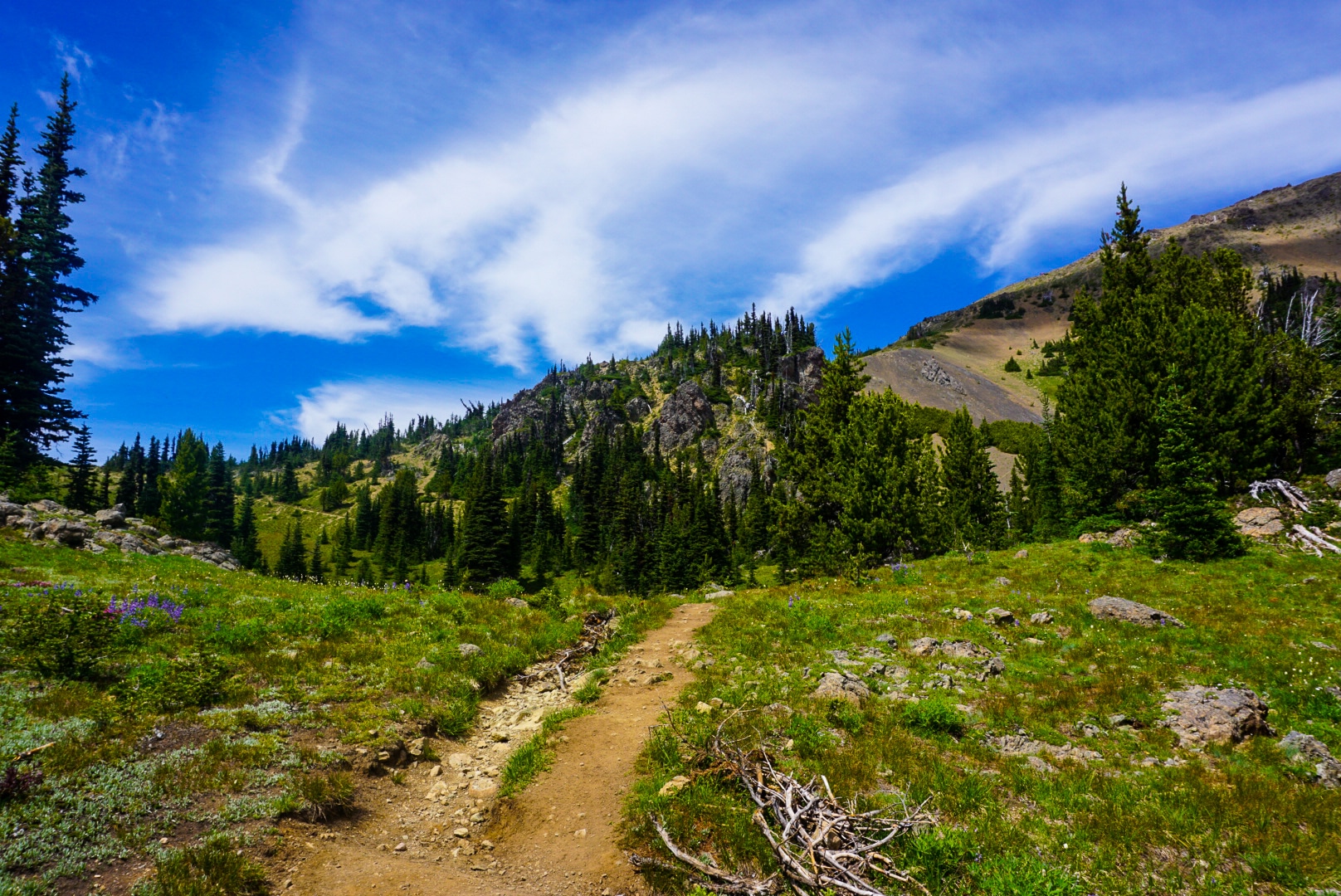
After the meadow, trees become sparse. The next section is a rugged, alpine canyon exposure as you head up the ridge a few more miles towards the pass.
There are plenty of places to stop and rest and/or eat a snack. Once atop the pass at the junction of trails, you have options on options for further exploration. Or you can set up camp and take a nap…
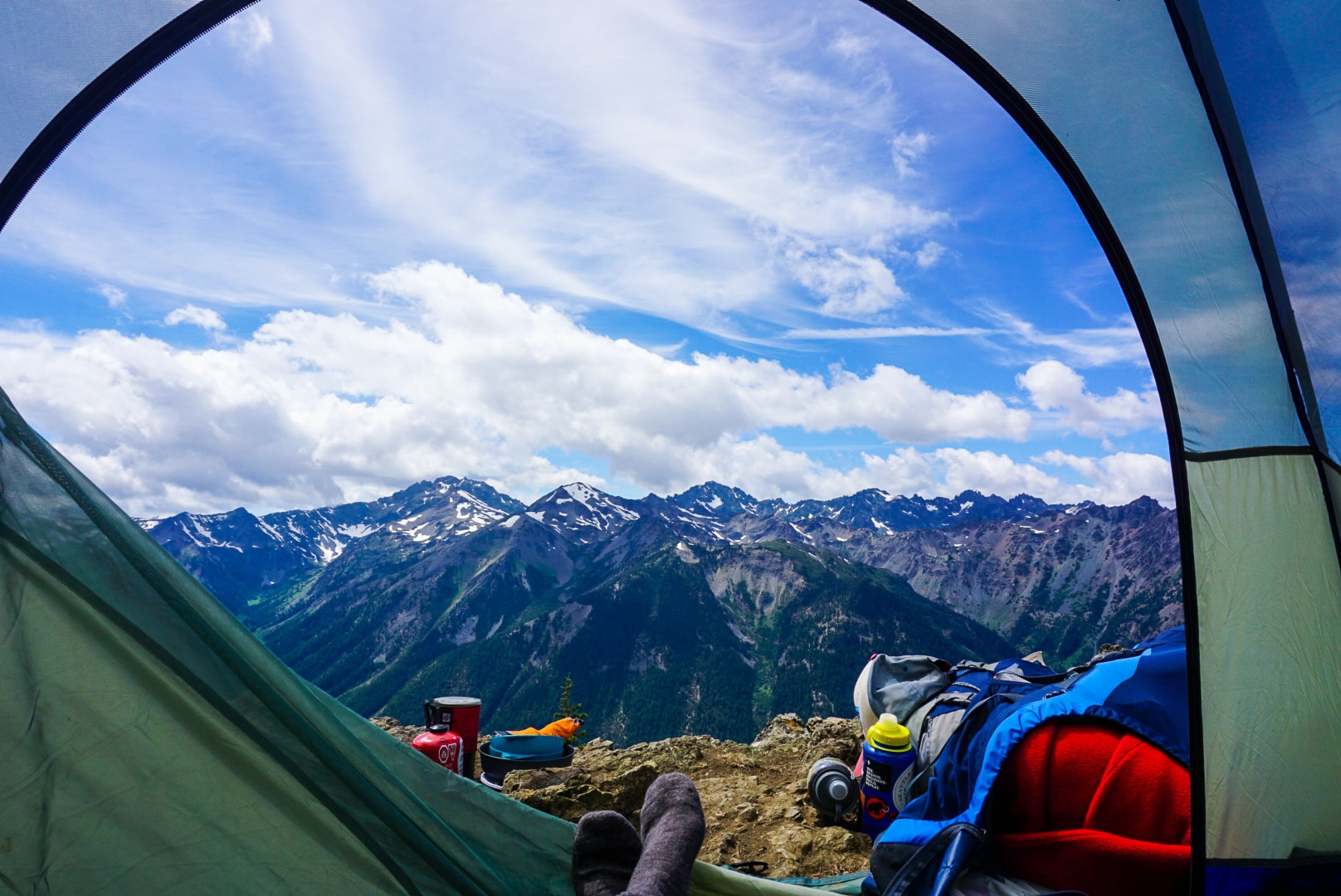
Where to sleep?
Camping options abound around Marmot pass. You may, however, have to hike a few more minutes once reaching the pass.
If the weather is bad, and you’re looking to limit the wind exposure, there are a few meadow campsites to the hikers’ left, right before the lip of the ridge.
If the weather is nice, take a left at the junction and head up the ridge. For smaller parties there are a smattering of sites within a 100 yards left from the junction on the thin ridge.
For larger groups, you can continue your hike up the same ridge and camp in an exposed meadow. Regardless of where you are camping for the night, make sure you make it to ridge at sunset with a warm jacket and your camping drink du jour for an awe-inspiring view of the sun tucking in for the night behind rugged Olympics.
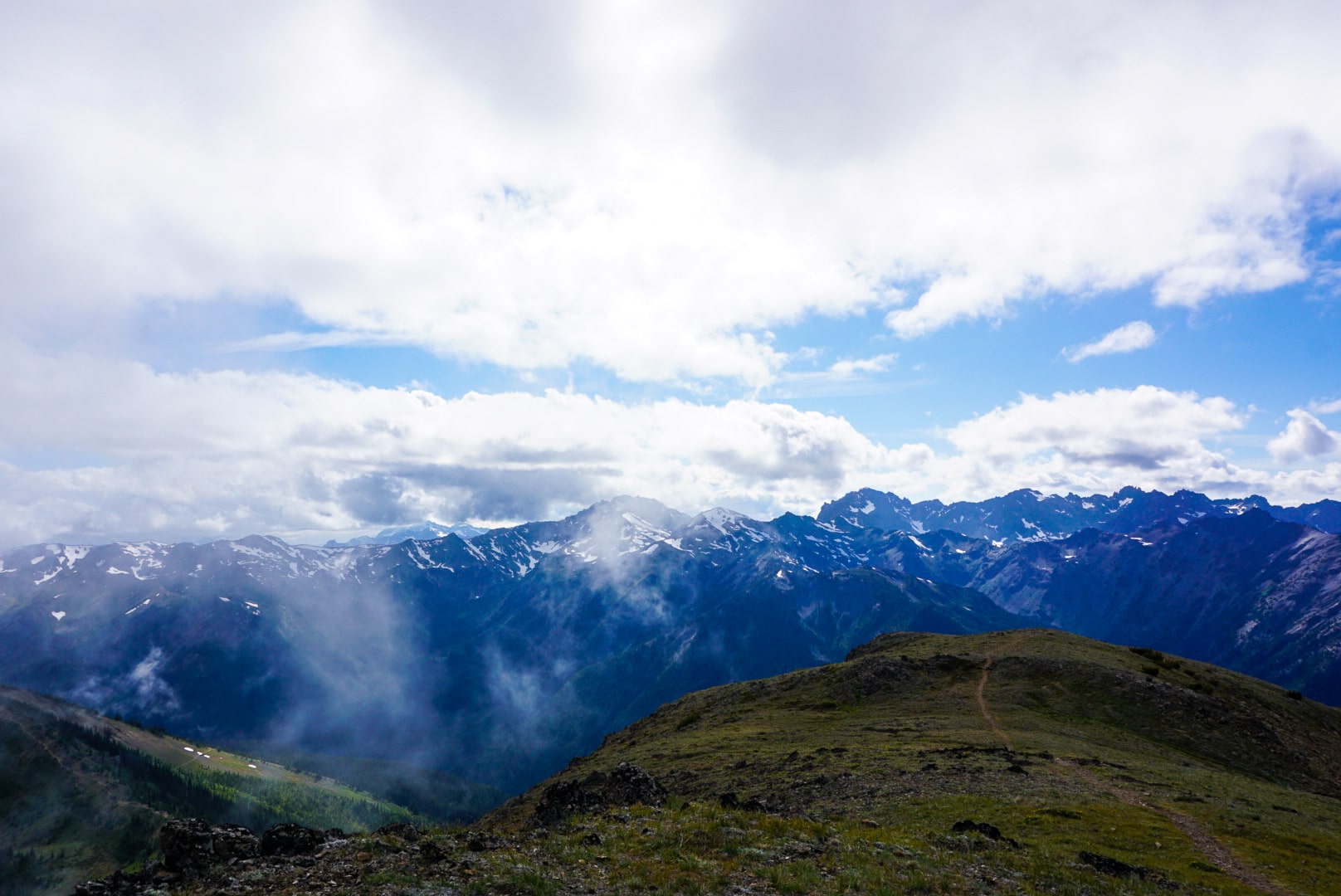
Keep exploring
Once you’ve made it to the junction there are a few choices. You may continue your journey to Tubal Cain Trail, Buckhorn Lake Camp, Boulder Camp, or Dungeness Trail.
Or for shorter options, if you’d rather set up camp and settle in, you could either explore Marmot Ridge (to the left once you arrive at the junction) or casually bag a quick peak (to the right once you reach the junction).
Buckhorn Mountain looms above Marmot Pass ridge. It is just one mile and 900 vertical feet of hiking away. Marmot Pass is such a fun destination for hikers, trail runners and backpackers because the options seem limitless.
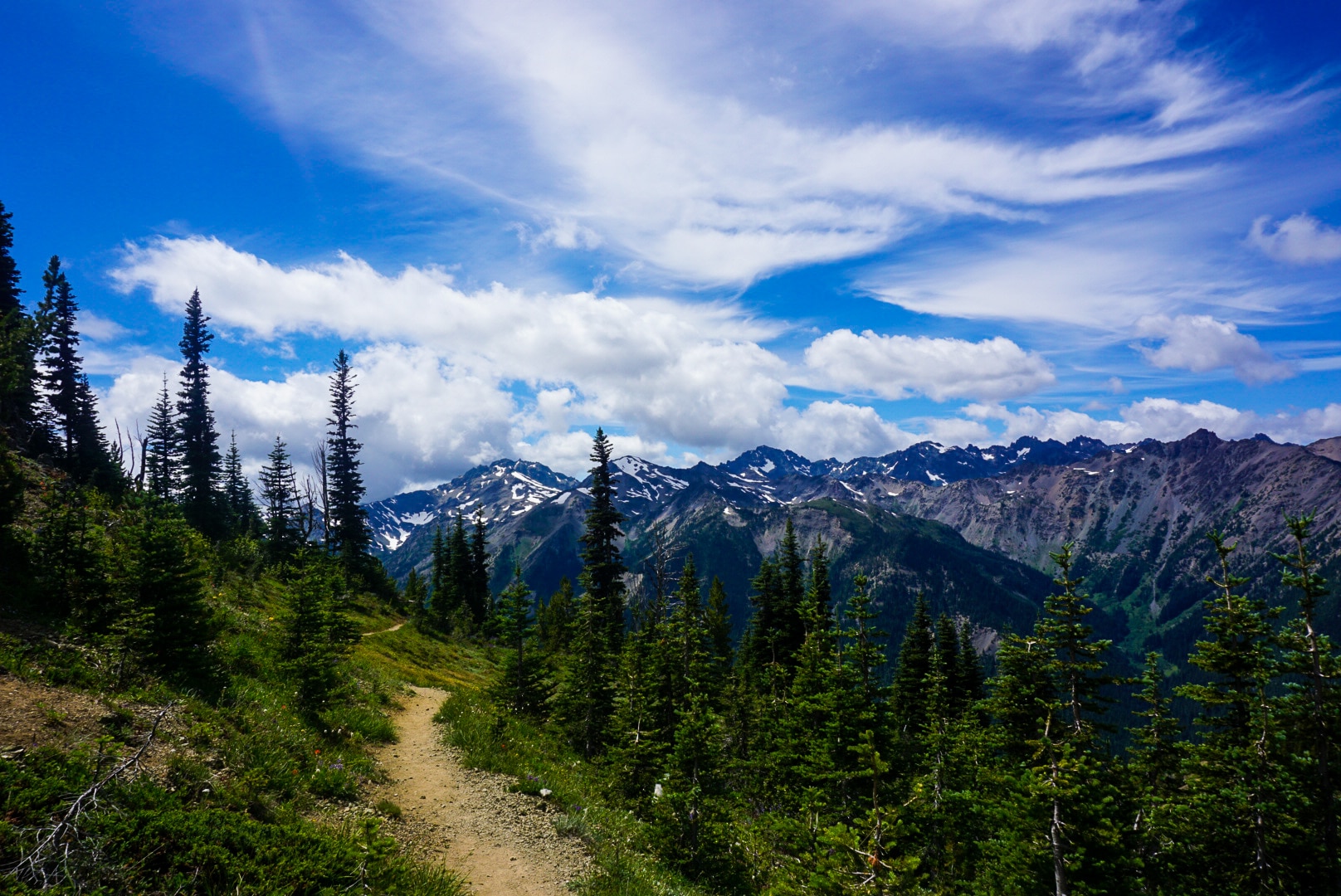
Tubal Cain Trail
If you have more than one night to explore Marmot Pass, Tubal Cain Trail is a excellent addition to your backpacking trip. Passing Buckhorn Lake you will be led to the old Tubal Cain mine site as well as the B-17 plane ruins. Check out the story of the crash here.
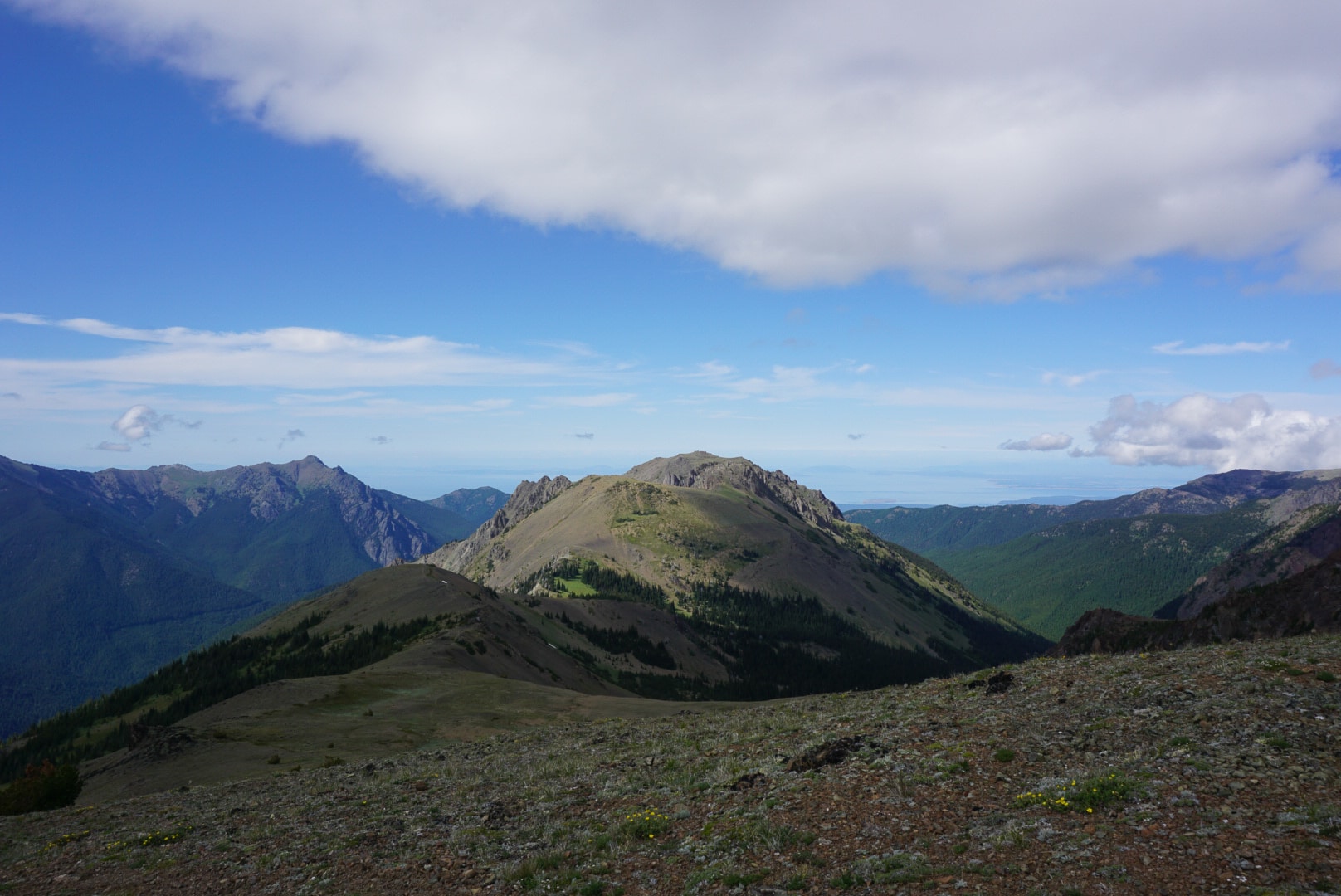
Buckhorn Mountain
Buckhorn Mountain is a steep and rewarding climb. With breathtaking views of both the Puget Sound and the surrounding mountains it is hard not to feel on top of the world. On a clear day you can catch a glimpse of Mt. Rainier, Mt. Baker, Mt. St Helens and Glacier Peak.
If Marmot Pass is your final destination and you can muster enough energy, this summit is the perfect way to end a gorgeous day of alpine hiking.
En route
Once you’ve made it to Quilcene you will drive on HWY 101 south for a mile and a half, at which point you turn right onto Penny Creek Road. Continue onto Penny Creek Road for a mile and a half. Follow it left onto Big Quilcene River Road, also known as Forest Road 27. Drive on Forest Road 27 for 9.25 miles then turn left onto Forest Road 2750. The trailhead will be at the end of 4.75 miles.
A Northwest Forest Pass is required for parking and there is a pit toilet right by the trailhead.
Click for tips from REI on “How to Survive a Pit Toilet”
I’m sold. What else should I know?
At the top of Marmot Pass there will be no water source nearby. Keep this in mind while packing and planning. If you don’t plan on bringing enough for your whole trip, you will need some way to purify water.
On the way to the pass there are some opportunities along the Quilcene River to refill an empty bottle. If you’re only doing a one night trip, it may be easier to just pack a liter or two more than usual.
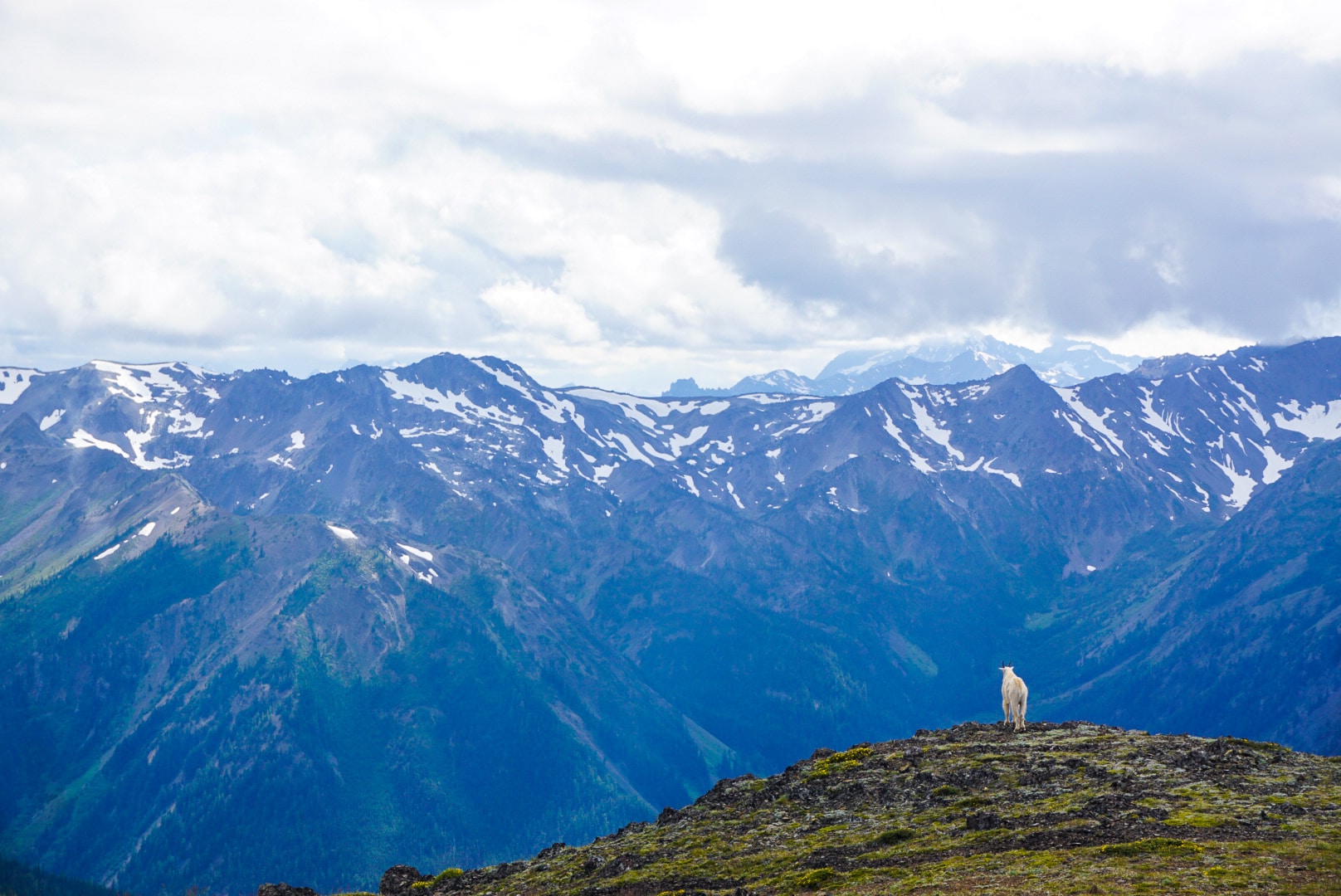
It is important to be wary of wildlife as Marmot Pass will have mountain goats, bears and other critters. Keep your food a safe distance from your campsite if you do not plan on hiking in a bear canister.
There is a good chance however that your chance for a Mountain Goat sighting will be very limited, as they are being moved to the Cascade Mountain Range.
Unless you are very experienced hiking with a heavy pack in trail runners, supportive hiking boots are best for your trip to the pass and beyond. If you are just planning on a day hike or trail run, the trail is well enough maintained that trail runners or lighter hiking shoes would work just fine. There are several very rocky portions of trail once you leave the old growth.
CLICK FOR: A Guide to Shoes For an Athletic Lifestyle.
When packing for Marmot Pass don’t forget to pack warm clothes. If camping on the ridge you will be exposed to wind chill so keeping warm will be an important detail you won’t want to miss. Think Long Johns and a beanie.
CLICK FOR: A Three Layer Approach to Style This Season
Marmot Pass is a unique experience. Once you have reached your destination the journey and possibilities for adventure feel endless.
It’s an area worth exploring inside and out. Being able to look out on the Puget Sound, the Cascades, and deep into the Olympic Mountain range is a wonderful representation of what the PNW backpacking is all about.